
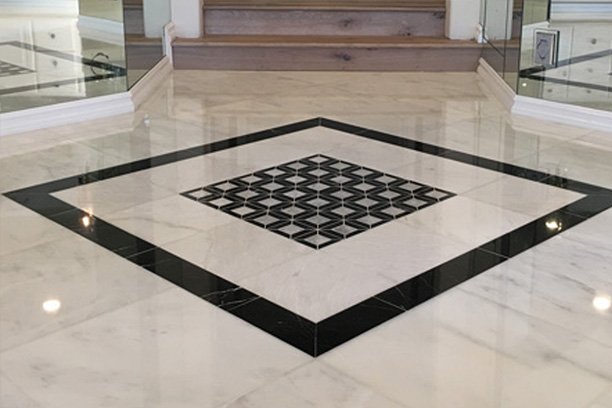
Marble has been a symbol of luxury and elegance for centuries. Its crystallization properties allow it to take a beautiful, mirror-like polish. However, high foot traffic, sand grit, acidic cleaner spills, and general wear and tear can create micro-scratches on the surface. These micro-scratches scatter light, causing the floor to look dull and lifeless.
In this guide, we will look at how professional marble floor polishing restores that luxury shine and protects the stone for years to come.
Understanding Light Reflections on Stone
To understand how polishing works, we have to look at physics. A glossy marble surface is completely flat at a microscopic level. When light strikes a flat surface, it reflects back evenly (specular reflection), creating clear mirror reflections.
When marble gets scratched, the surface becomes uneven. Light bounces off in different directions (diffuse reflection), which makes the floor appear hazy or dull. Simple mopping can clear surface dust, but it cannot fix the uneven surface structure.
"Marble polishing is not a coating. It is the mechanical process of smoothing the actual stone surface to reveal the natural crystallization patterns underneath."
The Mechanical Grit Sequence
Professional technicians use rotary grinding machines equipped with diamond abrasive discs. These diamonds are graded by grit size:
- Coarse Grits (50 to 200): Used for initial grinding to remove deep scratches and level uneven tile joints (lippage removal).
- Medium Grits (400 to 800): Clears up the scratch patterns left behind by the coarse grinding phase.
- Fine Grits (1500 to 5000): Performs micro-smoothing, opening up the stone crystals and starting to reveal the shine.
Crystallization: The Final Touch
After mechanical smoothing, we apply crystallization chemicals. These acidic compounds contain calcium fluorosilicate. When buffed into the floor with a steel wool pad, they trigger a chemical reaction with the calcium carbonate in the marble, creating a hard, glass-like barrier that is highly reflective and resistant to traffic.
Sealing: Locking in the Protection
Polishing makes the stone look beautiful, but it does not make it stain-proof. We apply a solvent-based, penetrating sealer (impregnator). This sealer sinks deep into the stone pores, keeping coffee, tea, and oil drops on the surface where they can be wiped off easily.
If your marble has lost its reflective gloss, contact a professional team like VK Marble Floor Polishing. Trying to restore stone floors using DIY acid cleaners can etch the surface, leading to permanent damage.